
Last updated on March 19th, 2025 at 03:45 pm
Every once in awhile, I come back to this camping checklist and revise it based on new experiences. You will be doing the same with your list.
These guidelines are intended for tent campers who drive to their campsite, rather than backpackers, who hike deep into the woods and wetlands with the barest of gear.
Tent sites in campgrounds are most often “primitive” with no water or electric, although most in Florida’s developed campgrounds will have picnic tables and fire pits.
The Basics
A camping checklist is essential whether you are a novice or veteran camper. Without it, you will forget something. Even with it, you’ll forget something (but it’s less likely you’ll forget something essential).
It helps to have your camping gear in one place. I store my gear in three storage boxes: Tent gear in one, camp kitchen in another, and one for recreation gear — plus a cooler.
Tent Gear
Plan your trip so you arrive at your campsite in daylight. Setting up camp in the dark can be a nightmare.
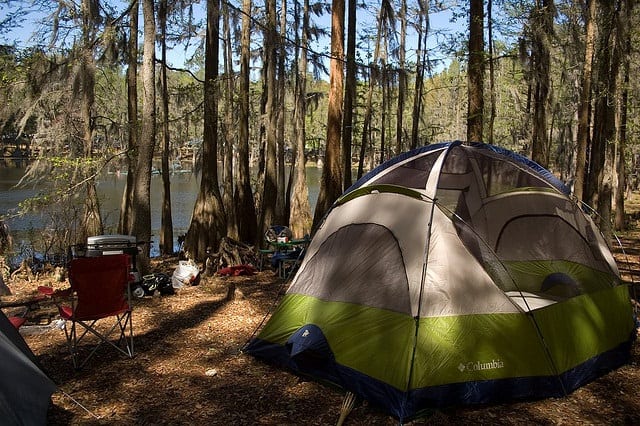
The Florida tent should be twice the capacity you need. Couples should have a tent that sleeps four; a family of four, your tent should sleep eight.
Your Florida tent should have good cross-ventilation to take advantage of prevailing breezes. If possible, select a site near water or shade, where breezes are best.
- A second tent for the kids? They’ll have more fun, and so will you. Most campgrounds allow two tents on a single campsite.
- Self-supporting tents are best in Florida. Many campsites have hard, crushed-shell surfaces, unfriendly to stakes.
A canopy or tarp will help you create your own shade when none is available. A canopy not only creates shade and disperses rain, but the shade creates a breezeway; a tarp can be used as a canopy or ground cloth.
Poles and Stakes – Pack stakes and poles with your tent. You should have two kinds of stakes for Florida: thin metal stakes for hard ground and sand spikes with ridges.
Sleeping mat – Self-inflating pads are best because they roll up tight, use little space and are easy to inflate. If you use inflatable air mattresses, don’t forget the air pump. Cots are best, allowing air to circulate around your body, but they are not always practical.
Sleeping bag – No need for high-tech bags. Inexpensive, lightweight bags are fine for Florida camping. In winter and spring, a blanket is handy if temperatures drop.
Lanterns and flashlights – Keep a battery lamp next to the tent door for late-night transit to the rest room. Leave propane lanterns outside (fumes). I always pack a rechargeable headlamp.
The Camp Kitchen
Your gear box should include only essential pots, plates and utensils. Use one storage container to combine dry food and kitchen gear. Backpackers favor lightweight all-in-one kits, but car campers have more leeway.
Bring one plate and large cup per person. The cup can be used as a bowl. Enamel is best because it cleans easily. One fork and one spoon per person. Use an all-purpose jackknife to cut your food. Avoid glass.
When leaving your campsite, make sure your feed is out of reach to wild animals. Store coolers, garbage and food in your vehicle, or dangle on ropes from tree limbs. Never leave water, food or garbage in your tent.
Camp stove – A small propane stove is the best choice. Also use propane for your lanterns so you’re not carrying multiple fuels. Don’t rely on fire pits. There are often drought restrictions in Florida that prohibit open fires, especially in the Spring.
Plates, cups, utensils – Enamel camping dishes are easy to clean with a cloth. Unbreakable Corelware is another good option. Stainless steel knife, fork and spoon for each person. (No plastic.)
Cooking utensils – A single serving spoon will do if you stick to one-pot meals, a spatula or tongs to flip steaks or fish a burger out of the fire.
Coffee – Enamel coffee pot, French press or freeze-dried instant coffee.
Pots and Pans – A pot and skillet are all you need.
Aluminum foil – The uses are too numerous to mention.
Dish soap – Biodegradable Ivory soap serves multiple uses, including showers, shaving and dish-washing.
Table cloth – A cheap vinyl tablecloth is practical. You don’t know who or what has been on that picnic table.
Paper plates, towels, napkins — Bulky for packing, but suit yourself. If a fire is allowed at your site, you can burn them. If not, it’s garbage you have to carry out. Reusable cotton cloths are practical.
Food
Keep it simple. One-pot meals are perfect: stews, soups, pastas and chili are nourishing and filling. Cook what you can ahead of time and freeze in containers. They double as ice in the cooler.
Snacks are good. Pepperoni, crackers, cheese. Potato chips tend to get left lying around on tables, attracting critters, even in daylight.
Perishable food – Keep in the cooler, and secure the cooler in your vehicle or wrap the cooler with bungee cords when not in use. Never keep food or garbage in your tent.
Bottled water – Bring plenty of it. Don’t trust water from the campground spigot. And store your water out of reach of raccoons. They can smell it, even in a jug.
Tip: Avoid cooking meals after dusk. Raccoons and bears may want to join you for dinner. Wash dishes immediately and store trash in your vehicle or dispose in critter-proof receptacles after every meal.
The Tool Bag
Pocket knife and pliers — Essential. A multi-tool should be standard gear.
Bug spray – It’s Florida.
Bear spray – A small can of pepper spray should keep unwelcome bears at bay. You are more likely to encounter bears in north and central areas of Florida.
Sunscreen — It’s Florida. Use at least SPF 30. Bring a UV-protected long-sleeve T-shirt if you have sensitive skin.
Seam sealer – Keep a tube in your toolbox and use it.
Hatchet – For pounding stakes and splitting firewood.
Tarp – Useful as temporary shelter or shade.
Camp Clothing
Each to his own, but be practical. A few essentials:
Rain gear — A lightweight, breathable and rain jacket that packs small.
Jeans – One pair per person for hiking, keeping bugs off, etc.
Shorts – This is Florida.
Long-sleeve T – One per person for chilly or buggy nights.
Short-sleeve T – It’s Florida.
Underwear and socks – Extra is good when you need something dry.
Footwear – Flip-flops for the bathhouse, sneakers or boat shoes, water shoes for paddlers. Florida’s underlying rock is coral.
Hats and caps — Wide-brim straw hats are smart for summer or beach camping.
Personal items
Washcloths and towels, biodegradable TP in case the bathhouse runs out. (If you’re in the woods, you can bury it.)
Biodegradable Ivory soap is all you need for any purpose.
Travel tubes of toothpaste, a toothbrush for each person and disposable razor.
Electronic devices
Some would argue that you should leave your electronics at home to better enjoy the outdoors, but I would defend their usefulness.
Smart phones — Handy in an emergency, but check available cell service at your destination.
Kindle or a Nook — Less weight and takes up less space than books, and you can read at night when everybody else is sleeping.
Battery Backup — A battery pack is essential. Most tent campgrounds do not have electricity for your chargers.
Handheld GPS — If you are an adventurous hiker or paddling a kayak in sprawling wetlands, a handheld GPS will track your path and help you get back home.
Camp Furniture
Almost all campgrounds have a picnic table, but you also might consider:
Camp stool – A multi-purpose camp stool packs small.
Collapsible chairs are great but take up space.
Hammocks? – Most campgrounds, public or private, prohibit hammocks.
Firewood/Charcoal
Campfires are part of the camping experience.
Buy local wood, hardwood when you can. Soft woods, like pine, are smoky. Unfortunately, hardwood may be difficult to find in Florida. Clean-burning Duraflame logs are an excellent alternative.
If you are foraging, use dead limbs when campground rules allow, but don’t chop down live trees. Besides damaging the tree, live wood burns poorly.
Charcoal takes up space. If you do use charcoal, don’t get the self-lighting kind. The infused lighter fluid adds a terrible taste to your food.
Toys
Give careful consideration to what you bring. The pile can grow fast.
Bicycles – There are always trails and campground roads, and the kids stay entertained.
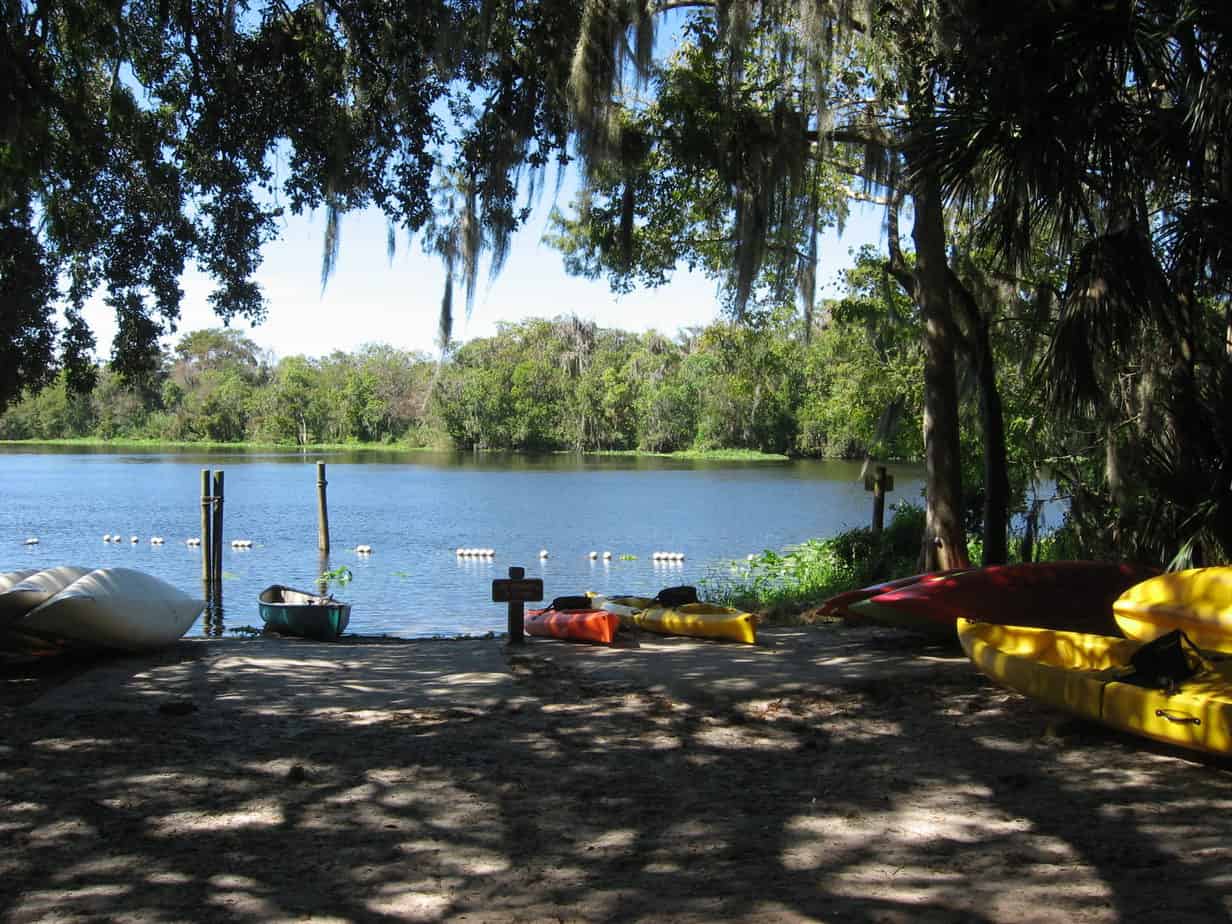
Kayaks and canoes – Bring ’em if you got ’em, but almost every campground near water has an outfitter nearby renting kayaks and canoes. If you bring your own, don’t forget life vests, paddles and water shoes.
Tubes – Florida is blessed with beautiful springs, and tubing is allowed at many. Rentals are almost always available nearby.
Fishing Gear — A couple of light- to medium-weight rods and a modest tackle box containing basic hooks, lines, sinkers and artificial lures. You need a state license, even when camping on federal lands. Related article: Do you need a Florida fishing license?
Games and books – Board games and cards are a great idea, and there’s nothing better than a good book to read while camping.
Horseshoes or corn hole – A great way to keep the family entertained.
First Aid Kit
Tent camping takes you out into the woods, and medical assistance is never near when you need it. A first-aid kit is something many campers forget, but you really should have one.
Bee-sting and snake-bite kits are a smart addition for your Florida first-aid kit, and a salve for those mosquito bites.
Pets
Most campgrounds, including Florida State Parks, now allow pets. But it’s likely your pet will be restricted to the campground, and you will not be permitted to leave them alone while you venture out. Many county-run parks prohibit pets, even in camping areas.
Alcohol
Florida State Parks restrict alcoholic beverage use to your campsite. Alcohol is allowed on all federal parks and lands, unless otherwise posted. Most county parks in Florida prohibit alcohol altogether.
Nobody is going to give you a hard time about a glass of wine with dinner, but be discrete.
Where alcohol is prohibited, campgrounds reserve the right to inspect your coolers. Ejection from the campground (no refund) is the penalty.
Related articles
- Backpacking: The gear you need
- Boat and beach camping checklist
- Kayak Camping: Sharkchow’s checklist
- Florida Rambler’s Camping archive